Compute for the next generation of data centers: notes from our panel at Tesla
Karishma Mandal joined a panel at Tesla to discuss what it takes to bring compute online in the new generation of AI data centers, and why the answer starts at the substation.
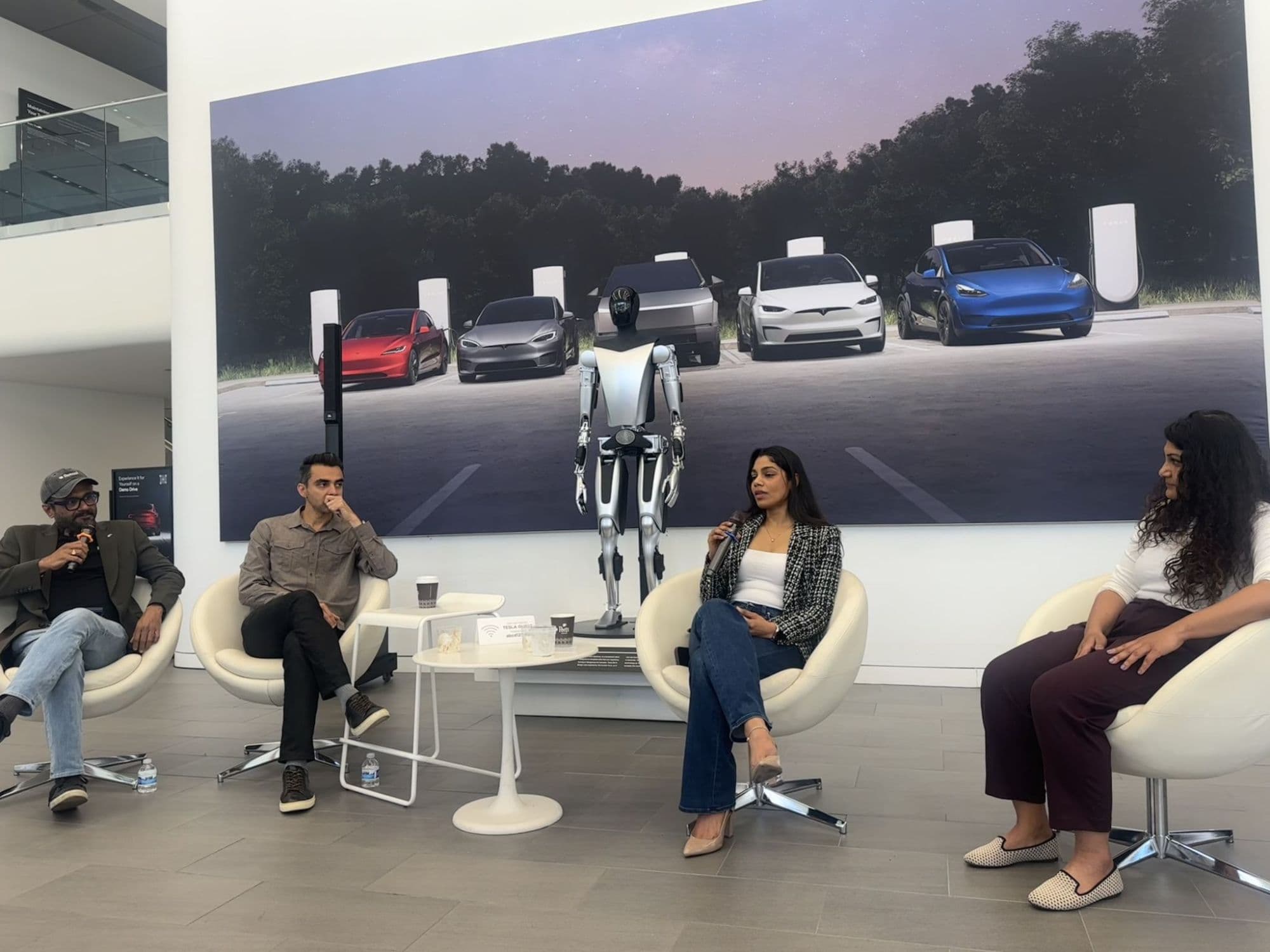
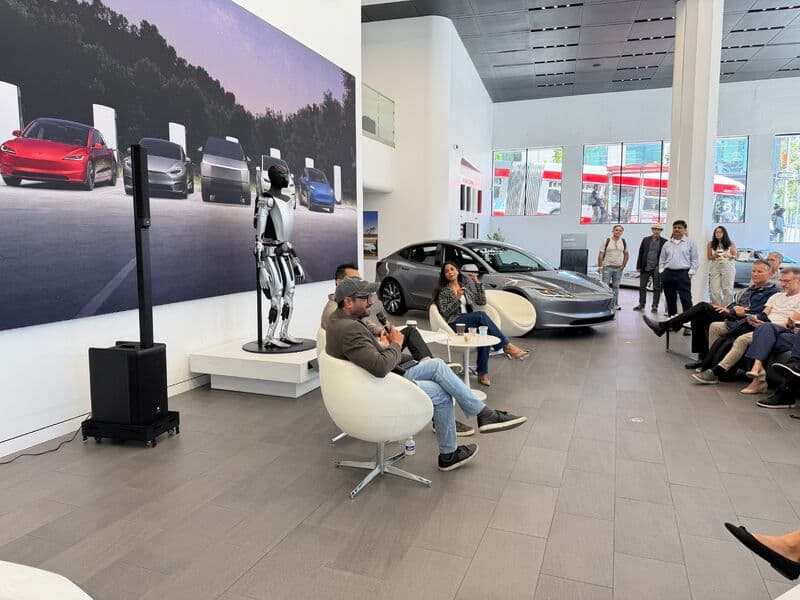
Our founder Karishma Mandal joined a four-person panel at Tesla on the compute behind the next generation of data centers. With Tesla's Optimus robot on the stage behind the panel, the conversation turned quickly from what AI can do to what it takes to power it.
The planning unit is the megawatt, not the server
The perspective Karishma brought is the one Aidni is built on: the AI build-out is limited by how fast power can be delivered to a site, not by how fast servers improve. US data centers used 4.4% of national electricity in 2023 and could use 6.7–12% by 2028. That growth arrives through interconnections that are energized in stages, often years apart.
So the right question for a new campus is not how many GPUs it can eventually hold. It is how much compute each energization phase can actually run, after cooling overhead and redundancy, and when.
Idle compute is the most expensive thing in the building
The economics make the point sharper. The compute inside a modern AI facility can exceed $30M per megawatt, roughly three times the cost of the building around it, and accelerators are typically refreshed every two to three years. A GPU that arrives before its power does is losing useful life every month it sits dark.
- Sequence hardware procurement against the energization schedule, not the construction schedule.
- Plan density per phase: a hall that can only reject 40 kW per rack in phase one should not receive racks designed for 130 kW.
- Treat cooling as part of the compute plan. Direct-to-chip liquid cooling decides how much compute a megawatt can carry.
Operations are the next bottleneck
The panel also discussed what happens after energization. Dense AI halls change faster than the tools used to run them, and operators are understandably cautious about letting AI act on live power and cooling systems. Karishma's view: AI belongs in the control room only through a small, governed interface, where agents can observe and propose changes and people approve them.
That combination, power-first planning and governed AI operations, is what Aidni is building for the next generation of data centers.